- pink heaven water park, Ram kutiya, Near, Kalwar Rd, Manchwa, Rajasthan 303706
- rahulsharma6070jaipur@gmail.com
- Mon - Fri : 9:00am to 7:00pm


Service Details
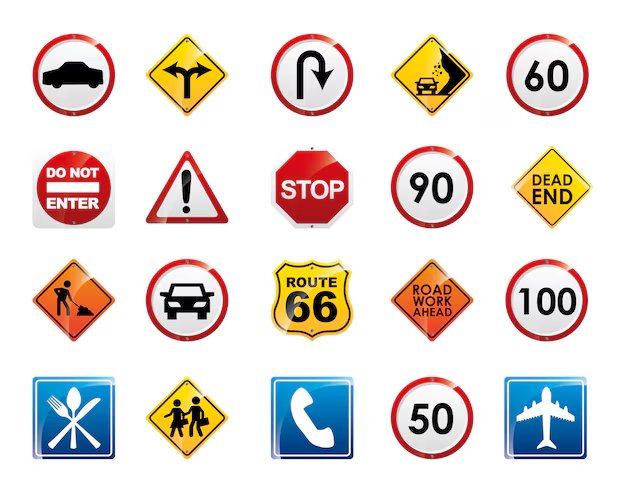
Road Sings Board
At Precision Driving School, understanding road signs and signals is a crucial part of your driver education. Knowing how to read and interpret these signs ensures you can navigate the roads safely and confidently. This guide covers the most common road signs and signals you will encounter.
Types of Road Signs
1. Regulatory Signs:
Stop Sign: Indicates that drivers must come to a complete stop and proceed only when it is safe.
Yield Sign: Instructs drivers to give the right of way to other vehicles and pedestrians.
Speed Limit Sign: Shows the maximum or minimum speed that is legally allowed.
No Entry Sign: Indicates that entry is not permitted for all vehicles.
2. Warning Signs:
Curve Ahead: Alerts drivers to a curve in the road.
Pedestrian Crossing: Warns drivers of a pedestrian crossing ahead.
School Zone: Indicates that the area is near a school and drivers should be cautious of children.
Slippery When Wet: Warns that the road may be slippery in wet conditions.
3. Informational Signs:
Hospital: Indicates the location of a hospital.
Rest Area: Shows the location of a rest area.
Gas Station: Indicates the presence of a gas station.
Tourist Information: Provides information useful to tourists.
4. Guide Signs:
Highway Route Marker: Indicates the route number of a highway.
Exit Sign: Shows the exit number and direction.
Distance Sign: Provides information on the distance to various locations.
Destination Sign: Indicates directions and distances to cities or attractions.
5. Construction Signs:
Road Work Ahead: Alerts drivers to construction work on the road.
Detour: Indicates an alternative route due to road closures.
Flagger Ahead: Warns that a flagger is controlling traffic ahead.
Lane Closed: Notifies drivers that a lane is closed due to construction.
Traffic Signals
1. Traffic Lights:
Red Light: Indicates that vehicles must stop.
Green Light: Indicates that vehicles can go.
Yellow Light: Warns that the light is about to change to red and drivers should prepare to stop.
2. Pedestrian Signals:
Walk Signal: Indicates that pedestrians may cross the street.
Don't Walk Signal: Indicates that pedestrians should not start crossing.
3. Arrow Signals:
Green Arrow: Indicates that vehicles may turn in the direction of the arrow.
Yellow Arrow: Warns that the light is about to change and vehicles should prepare to stop.
Red Arrow: Indicates that vehicles must stop and cannot turn in the direction of the arrow.
Pavement Markings
1. Lane Lines:
Broken White Line: Indicates that lane changes are allowed.
Solid White Line: Discourages lane changes but does not prohibit them.
Double Yellow Line: Indicates that passing is not allowed for traffic in either direction.
2. Crosswalks:
Indicates areas where pedestrians can cross the road. Drivers must yield to pedestrians in crosswalks.
3. Arrows on Road:
Indicate the direction that vehicles must travel in a particular lane (e.g., left turn only, straight ahead).
4. Stop Lines:
Solid white lines across the road indicating where vehicles must stop at traffic signals or stop signs.
Tips for Learning Road Signs and Signals
Study Regularly:
Review your driver’s manual frequently to become familiar with all road signs and signals.
Take Practice Tests:
Use online resources and practice tests to test your knowledge and identify areas where you need improvement.
Observe While Driving:
Pay attention to road signs and signals while practicing driving to understand their practical applications.
Ask Questions:
Don’t hesitate to ask your instructor if you are unsure about any signs or signals.
Understanding road signs and signals is essential for safe driving. At Precision Driving School, our courses include comprehensive lessons on these crucial elements to ensure you are well-prepared for the road. Contact us today to learn more about our driving programs and start your journey towards becoming a skilled and knowledgeable driver.

Driving School Advantages
Nunc quam arc pretium quis quam sed laoret efficy tur liquam volutpat lobortis sem consets.
- 60 Mins Driving Lesson
- Additional Time Available
- 2 Hour Highway Lesson
- Car Rental For Road Test
- Road Test Appointment
- 7 Hour Pre-Licensing Course